
Polyclonal Antibody Sequencing.
Convert Powerful Polyclonals into Reliable Monoclonals using REpAb® Polyclonal Antibody Sequencing
Why Use Polyclonal Antibody Sequencing?
Polyclonal antibodies are valued for their robust multi-epitope binding, but their dependence on biological systems makes them inherently difficult to reproduce. Addressing this challenge requires an approach that retains the functional advantages of polyclonal antibodies without ongoing reliance on animal sources. Antibody sequencing and recombinant expression makes this possible.
REpAb® is Rapid Novor’s platform for sequencing polyclonal antibodies and converting them into defined, recombinant monoclonals. It enables laboratories to preserve the full functional diversity of immune responses while creating reproducible, scalable antibody reagents suitable for long-term research, assay development, and drug discovery.
pAb to mAb Conversion and New Approach Methodologies.
Regulatory agencies, including the FDA, EMA and Health Canada, are accelerating the adoption of New Approach Methodologies (NAMs); scientific approaches and methodologies designed to replace, reduce, or refine animal testing (the “3Rs” principles) in the non-clinical development phase of new medicines. By converting animal-derived polyclonal antibodies into defined recombinant monoclonal reagents, REpAb® directly supports this shift.
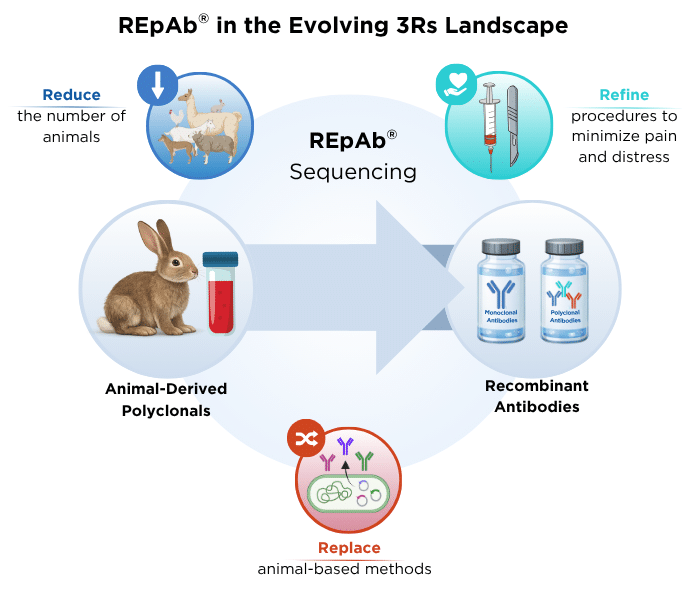
How REpAb® Works.
REpAb® is a proprietary platform designed to reconstruct monoclonal antibodies directly from polyclonals. By integrating advanced proteomic, genomic, and structural approaches, REpAb® enables the discovery of highly specific, high affinity antibodies that might be missed using conventional methods.
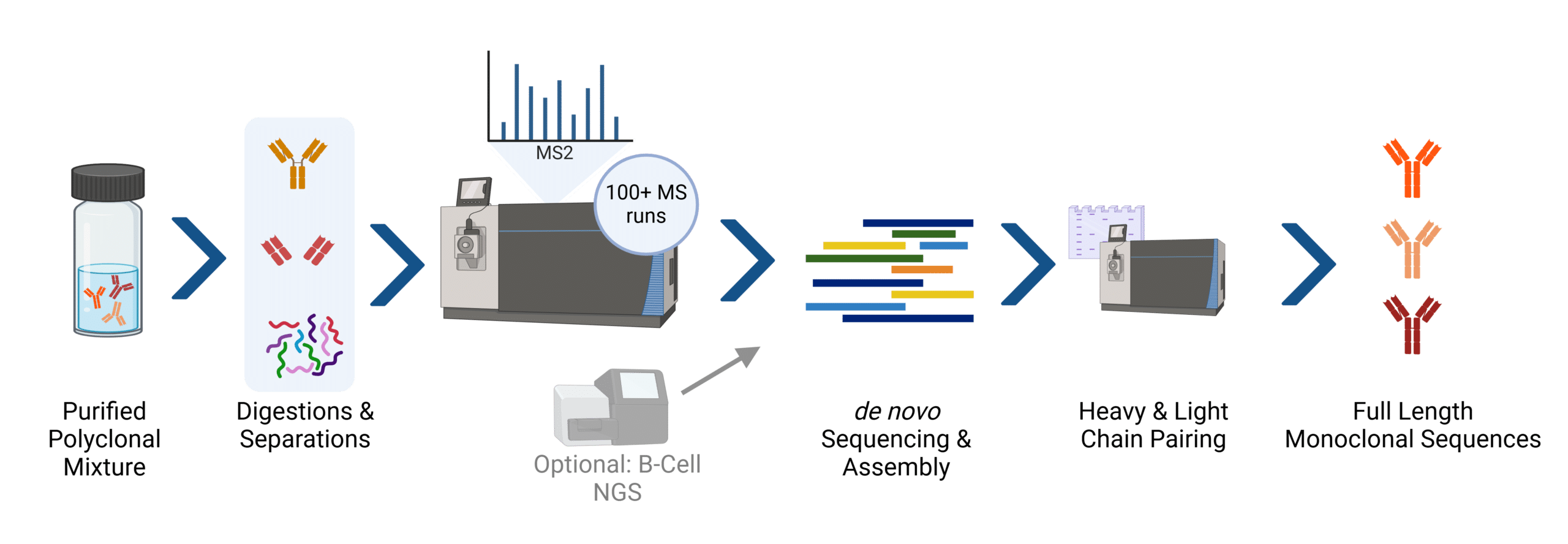
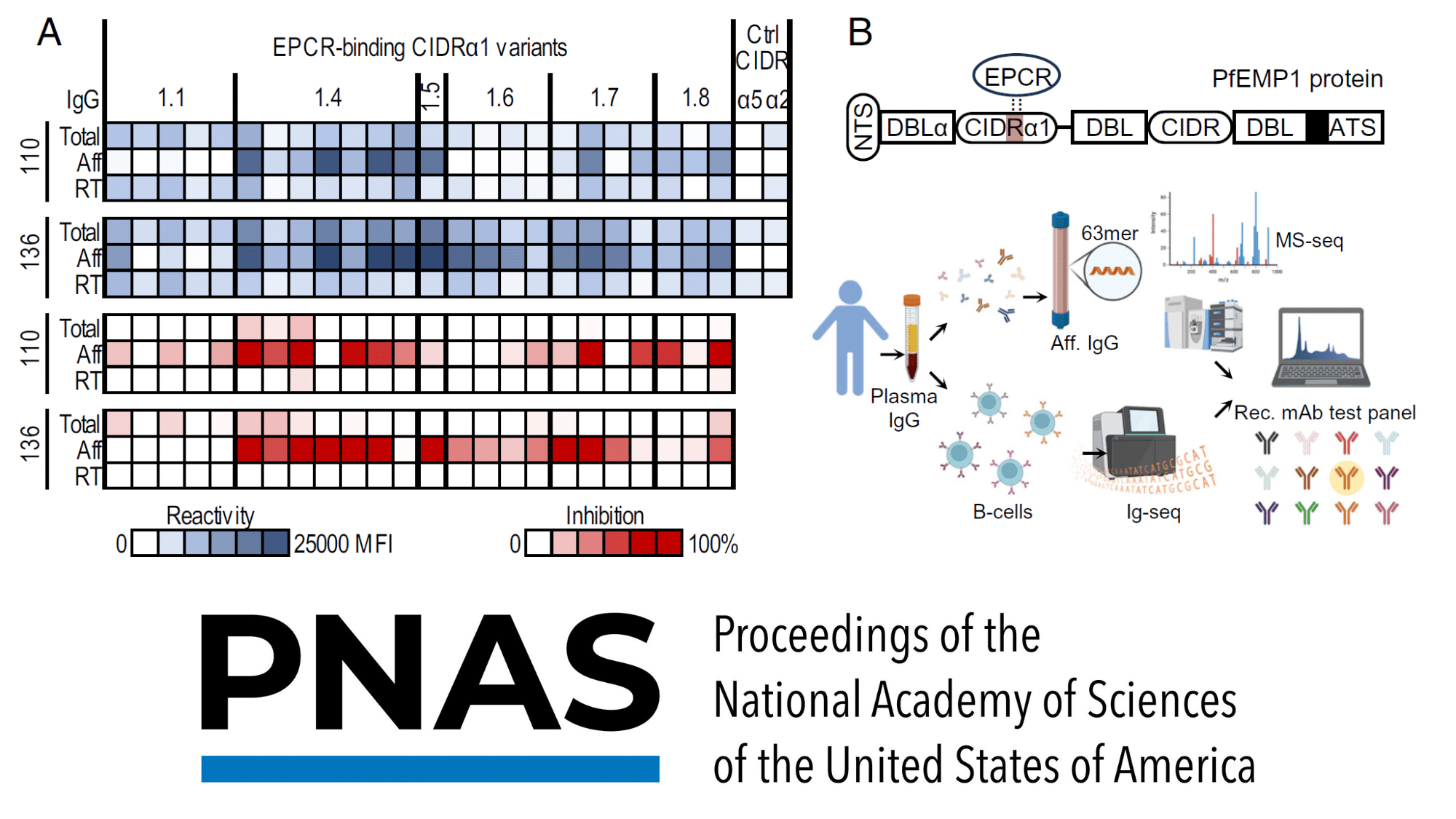
 The REpAb® workflow begins with enrichment of antibodies directly from plasma or serum. Using highly specific antigen probes, polyclonal IgG is captured from the complex plasma mixture, ensuring that only antibodies with functional relevance to the target antigen are analyzed. This approach isolates naturally affinity-matured antibodies without the need for B cell sorting, capturing the true physiological repertoire of circulating antibodies.
Key capabilities include:
-
- Identification of complementarity-determining regions (CDRs) and framework sequences.
- Detection of somatic hypermutations and sequence variants, reflecting the natural affinity maturation process.

- High sensitivity, allowing discovery from limited plasma volumes or archived samples.
- Reconstruction of complete monoclonal antibody sequences, including heavy and light chain pairing.
- Cross-references MS data with Ig-sequencing, prioritizing high-confidence sequences for downstream recombinant antibody expression and functional studies.
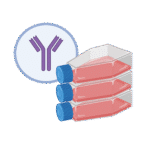
Identified monoclonal antibody protein sequences are recombinantly expressed and evaluated for functional relevance:
- ELISA or other binding assays to confirm target specificity.
- Ranking of candidates by abundance, sequence quality, or functional metrics.
-
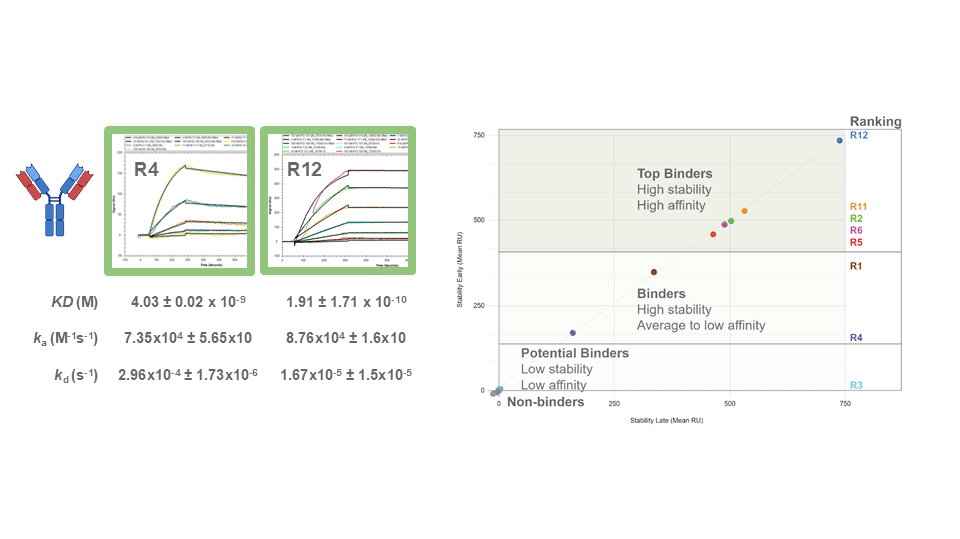
- Surface Plasmon Resonance (SPR) for kinetic profiling (association/dissociation rates, equilibrium constants).
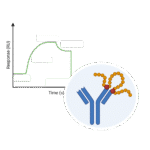
- Epitope Binning via SPR to identify unique binding site clusters among VHH candidates.
- Hydrogen-Deuterium Exchange Mass Spectrometry (HDX-MS) for detailed epitope mapping and structural footprinting.
These methods reveal binding diversity, affinity profiles, and epitope landscapes across your candidate panel, supporting rational selection of leads for therapeutic or diagnostic pipelines.
Applications.
Application Note: Goat pAbs to mAb Conversion
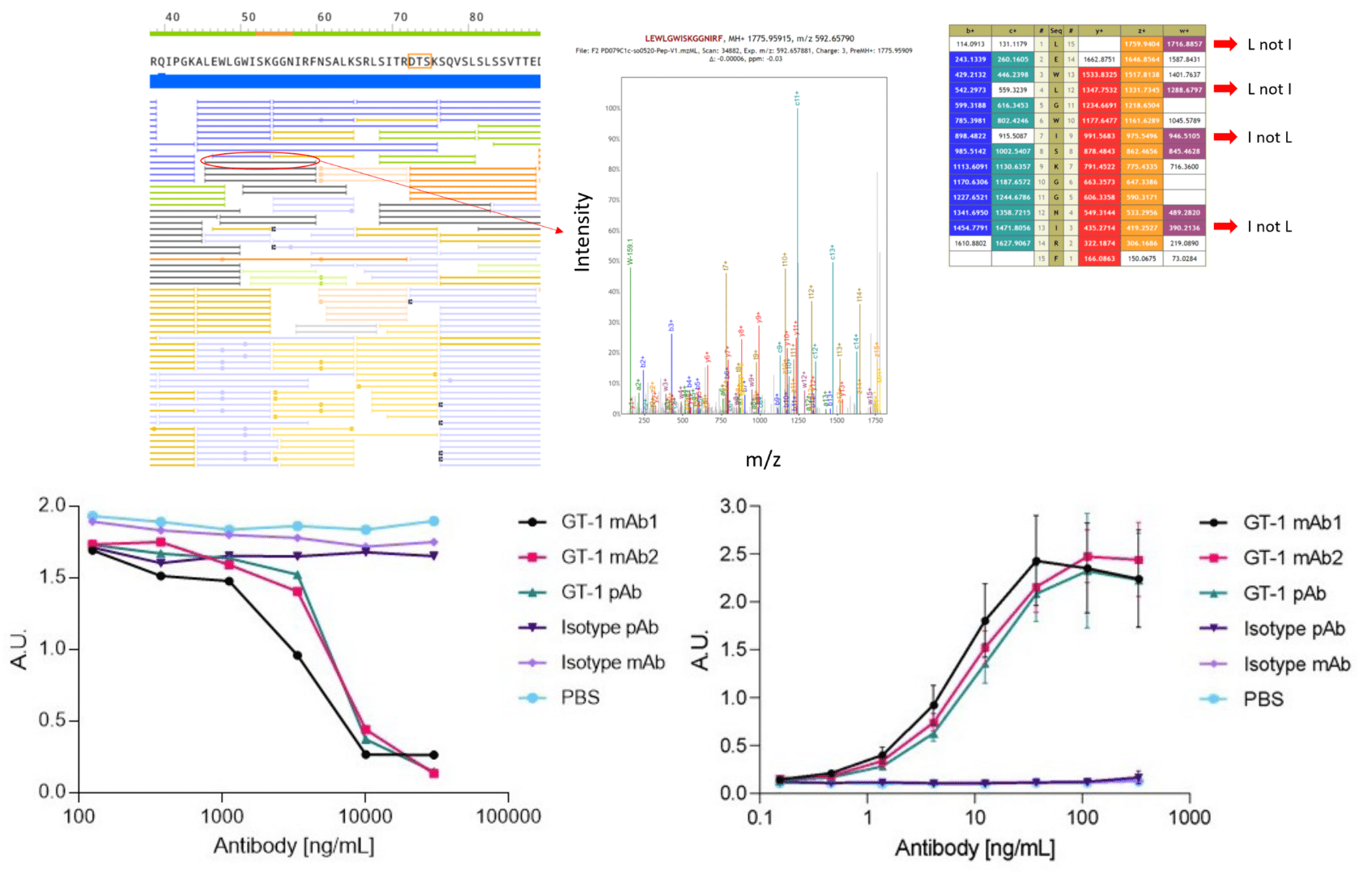
REpAb® was applied to a goat anti-AIF1 polyclonal mixture. The full amino acid sequences of two monoclonal antibodies was determined, including I/Ls, with no knowledge of cell lines or nucleotide sequence data. These antibodies were then recombinantly expressed and assessed using ELISA, which showed comparable binding activity between the recombinantly expressed antibodies and the original pAb.
This demonstrates the capability of REpAb® to convert polyclonal antibodies into monoclonals while preserving the original efficacy of the polyclonal.
Getting Started.
Requirements
- 1 mg polyclonal antibody – must be antigen-affinity and protein A/G purified IgG
- Most species are accepted (rabbit, chicken, goat, sheep, camelid, dog, etc.)
- Single host (not pooled); pooling from multiple bleeds of a single host is acceptable
- Optional: 100 μg antigen protein
- Optional: NGS data or PBMCs from the same host at a similar time point
Deliverables
- Full-length heavy and light chain sequences, with confidence metrics through peptide datasets.
- Abundance and ranking data to prioritize leads.
- Chain pairing, including any alternative pairs observed.
- Recombinant expression constructs and expression data (optional).
- Biophysical characterization of recombinant antibodies (optional).
- Technical report summarizing methods, results, and recommended candidates.
Turn-Around Time

Thierry Le Bihan, PhD
Principal Scientist, Polyclonal Antibody Sequencing
Talk to Our Scientists.
We Have Sequenced 9000+ Antibodies and We Are Eager to Help You.
Through next generation protein sequencing, Rapid Novor enables timely and reliable discovery and development of novel reagents, diagnostics, and therapeutics. Thanks to our Next Generation Protein Sequencing and antibody discovery services, researchers have furthered thousands of projects, patented antibody therapeutics, and ran the first recombinant polyclonal antibody diagnostics
Talk to our scientists. We have sequenced over 9000+ antibodies and we are eager to help you.
Talk to Our Scientists.
We Have Sequenced 10,000+ Antibodies and We Are Eager to Help You.
Through next generation protein sequencing, Rapid Novor enables reliable discovery and development of novel reagents, diagnostics, and therapeutics. Thanks to our Next Generation Protein Sequencing and antibody discovery services, researchers have furthered thousands of projects, patented antibody therapeutics, and developed the first recombinant polyclonal antibody diagnostics.
The Science of Antibody Discovery.
Antibody Sequencing & Discovery Services.

Antibody Sequencing, Discovery and Characterization Services.
Antibody Sequencing & Discovery Services.
REmAb® mAb Sequencing
Monoclonal antibody sequencing from small antibody samples, no need for hybridoma or DNA information. Full sequence in record time.
Explore Antibody Sequencing Services

REpAb® pAb Sequencing
Polyclonal antibody sequencing and antibody discovery service. Sequence antibodies from blood or a polyclonal mixture.
Explore Antibody Discovery Services

RapidSPR™ Analysis
Label-free evaluation of antibody-antigen binding using surface plasmon resonance on Biacore or Nicoya. Can be employed for detailed kinetic profiling, kinetics screening, or epitope binning.
Explore SPR Services
RapidHDX-MS™
Mass spec based epitope mapping. Epitope mapping for identify the binding site of an antibody to its corresponding antigen with the highest confidence and resolution.
Explore HDX-MS Epitope Mapping Service
MATCHmAb™
Antibody verification by rapid peptide mapping. Antibody sequence confirmation and full detailed mapping for development purposes.
Explore Peptide Mapping Service
Antibody Characterization
LC-MS analysis for study of antibody glycosylation, disulfide bonds, post-translational modifications, sequence variants, intact mass and size.
Explore Antibody Characterization Services